

And sometimes that question is simply:
Why does this keep coming back?
The same reaction, the same kind of situation, the same fear. The same pattern you thought you had already moved beyond. It can be frustrating when something familiar returns, especially when you feel as though you’ve already done the work. But reflection invites you to change the question.
Instead of:
Why am I still doing this?
You might begin with:
What is this trying to show me?
Reflection gives you space to slow down long enough to notice what’s actually happening beneath the surface.
What am I feeling?
What keeps coming back?
What am I avoiding?
What am I tolerating?
What do I need?
What do I actually want now?
You don’t need to have all the answers. You only need enough curiosity to begin.
You already know more than you think
There’s no shortage of advice telling us what we should do. Books, podcasts, courses, social media, even friends and family, or other people’s opinions. And sometimes, the more voices we listen to, the harder it becomes to recognise our own.
melondust reflection isn’t about giving you another set of rules to follow. It’s about turning the volume down on everything outside of you for a moment and becoming curious about what’s happening within you. Because your next step doesn’t always need to come from somebody else. Sometimes you already know that something feels wrong for you. You already know that you’re tired or have outgrown something. That the same situation keeps hurting and you need a boundary or want something different. You may simply need enough quiet to admit it to yourself.

Start small. Start free.
Not sure where to begin?
You don’t need to buy a book or commit to a new journaling practice to begin reflecting. Sometimes one short resource is enough to help you look at something from a different angle. The free melondust downloads are designed to give you a gentle entry into some of the themes that often appear during periods of personal change.
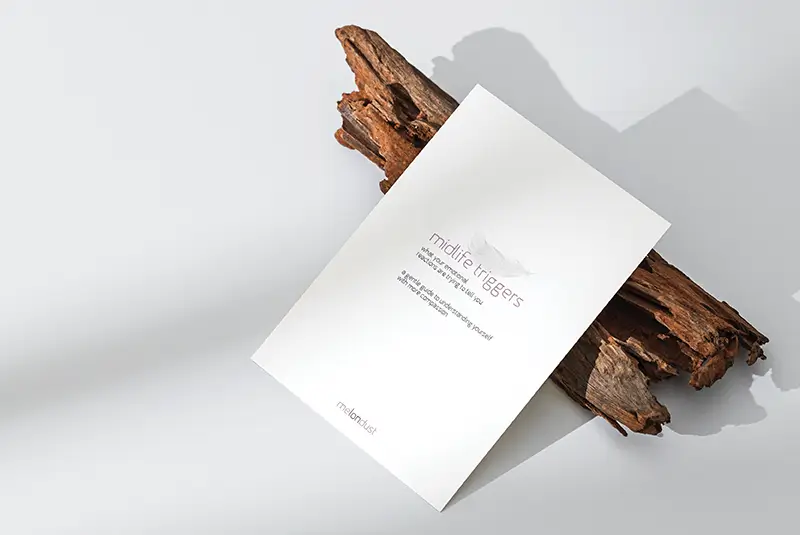
Workbook
Midlife Triggers
A gentle workbook for exploring one emotional reaction with more curiosity and compassion.
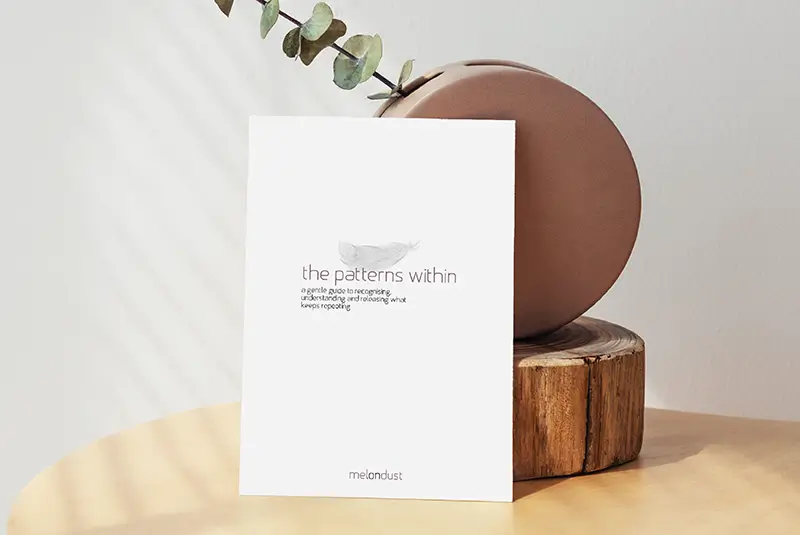
Workbook
The Patterns Within
A guided workbook for recognising and exploring a recurring pattern and the belief or energy beneath it.
Journal your way back to yourself
Sometimes one good question can open a door
For a long time, journaling can look like this intimidating idea of sitting down with a beautiful notebook and somehow knowing exactly what to write. It doesn’t have to be. You don’t need pages and pages of insight or a perfect handwriting. Or even to wake up at 5am and create a flawless morning ritual. And you don’t have to call yourself “a journaler.” A guided question simply gives your thoughts somewhere to go.
It can help you put language around something you’ve only been feeling. It can help you notice why a situation affected you so strongly. See the fear underneath a decision. Recognise a boundary you haven’t been setting. Acknowledge something you want. Or finally see a recurring pattern clearly enough to say:
I don’t want to keep responding to this in the same way.
My guided reflection work is designed to help you explore things like your desires, fears, triggers, boundaries, patterns and the person you’re becoming. Not by telling you what your answer should be. By giving you enough space to hear your own.
One question.
One honest answer.
One moment with yourself.
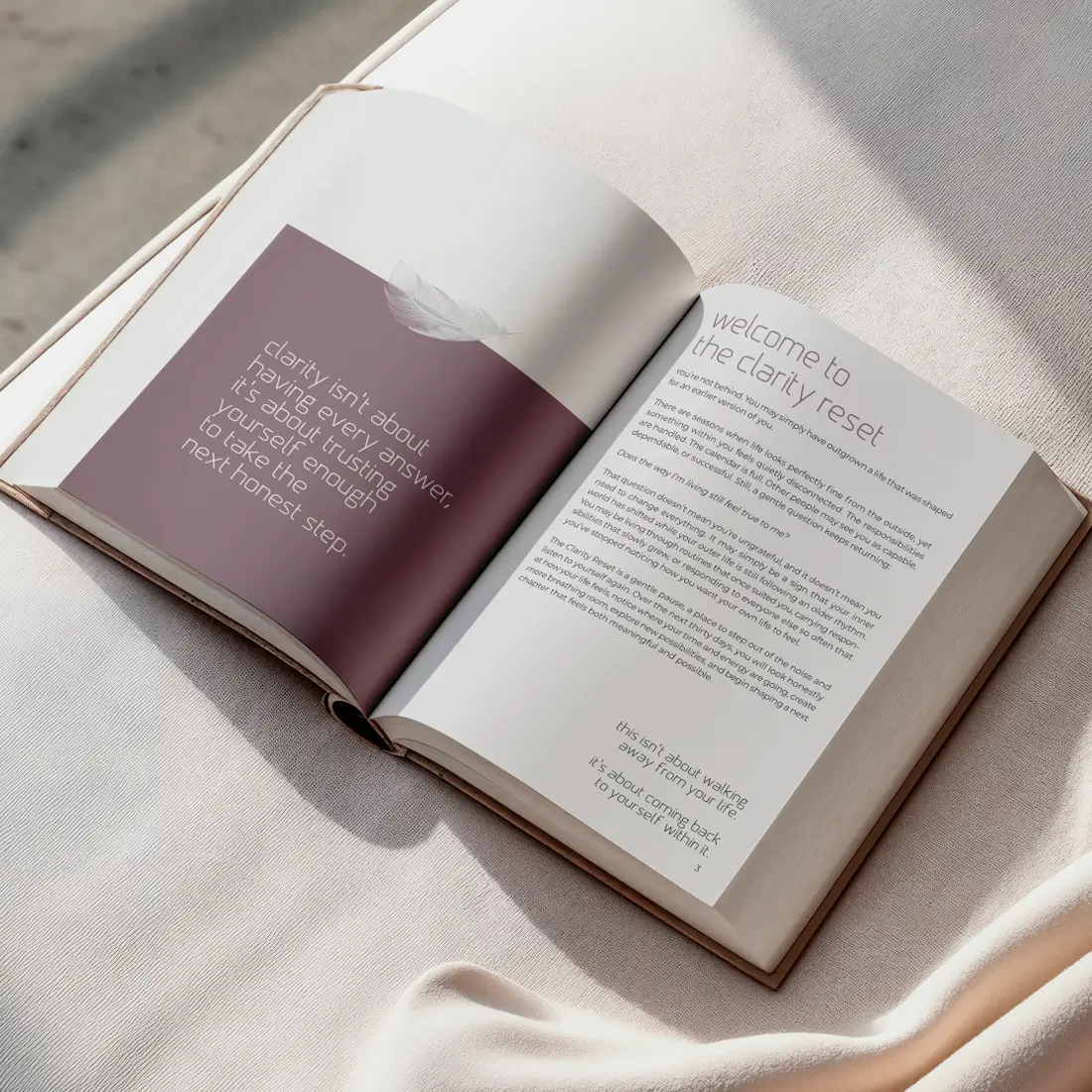
The Clarity Reset
Start here when you want direction
Sometimes you know you want greater clarity, but a deep dive feels like too m
uch. You don’t need to begin by unpacking every experience you’ve ever had. You can begin by checking in with where you are now. What feels clear? What feels noisy? What’s taking more energy than it should? What have you been pushing aside? And what might need your attention?
The Clarity Reset is a structured 30-day process designed to help you step back and find your next honest direction
A place to pause, to notice, to clear some of the noise, and to reconnect with what you may already know underneath all of it. You don’t need to arrive ready to change your whole life. You just need to be willing to check in with yourself.
Coming soon
Your triggers aren’t the enemy
Getting triggered can feel like proof that you haven’t grown as much as you thought. You thought you had dealt with it. Thought you were over it. And then something happens and the reaction is right there again. The anger, the fear, the need to defend yourself, the urge to disappear. The need to keep somebody else happy. And almost immediately: Why am I reacting like this again? But what happens when you replace judgment with curiosity?
Instead of:
Why am I still reacting like this?
Try:
What’s this reaction showing me?
What feels threatened here? What am I afraid of? Does this remind me of something? Is there a boundary missing? What am I needing that I’m not giving myself? What am I trying to protect? You don’t need to excuse every reaction, and you don’t need to analyse yourself endlessly. But a trigger can give you information. It can show you where something still feels tender. Where an old story is still active. Where you’re abandoning your own needs. Or where you may be ready to respond differently. A trigger doesn’t have to become another reason to criticise yourself. It can become an invitation to understand yourself.

When old patterns return
It doesn’t always mean you’re going backwards
Personal growth would be much easier if we learned a lesson once and never met it again. But that’s rarely how life works. Sometimes the people pleasing returns, the self-doubt, the overthinking, the fear or the urge to stay small so someone else remains comfortable. And because you recognise it, you assume you shouldn’t still be experiencing it.
But perhaps the question isn’t:
Why am I back here?
Perhaps it is:
Who am I this time?
Maybe you notice the pattern sooner or you don’t stay in the situation as long. Maybe you say no and speak honestly. You may set the boundary faster and ask for what you need or walk away earlier. Or simply recognise what’s happening without immediately losing yourself inside it. You may be meeting something familiar. But you aren’t necessarily meeting it as the same person. And that matters.
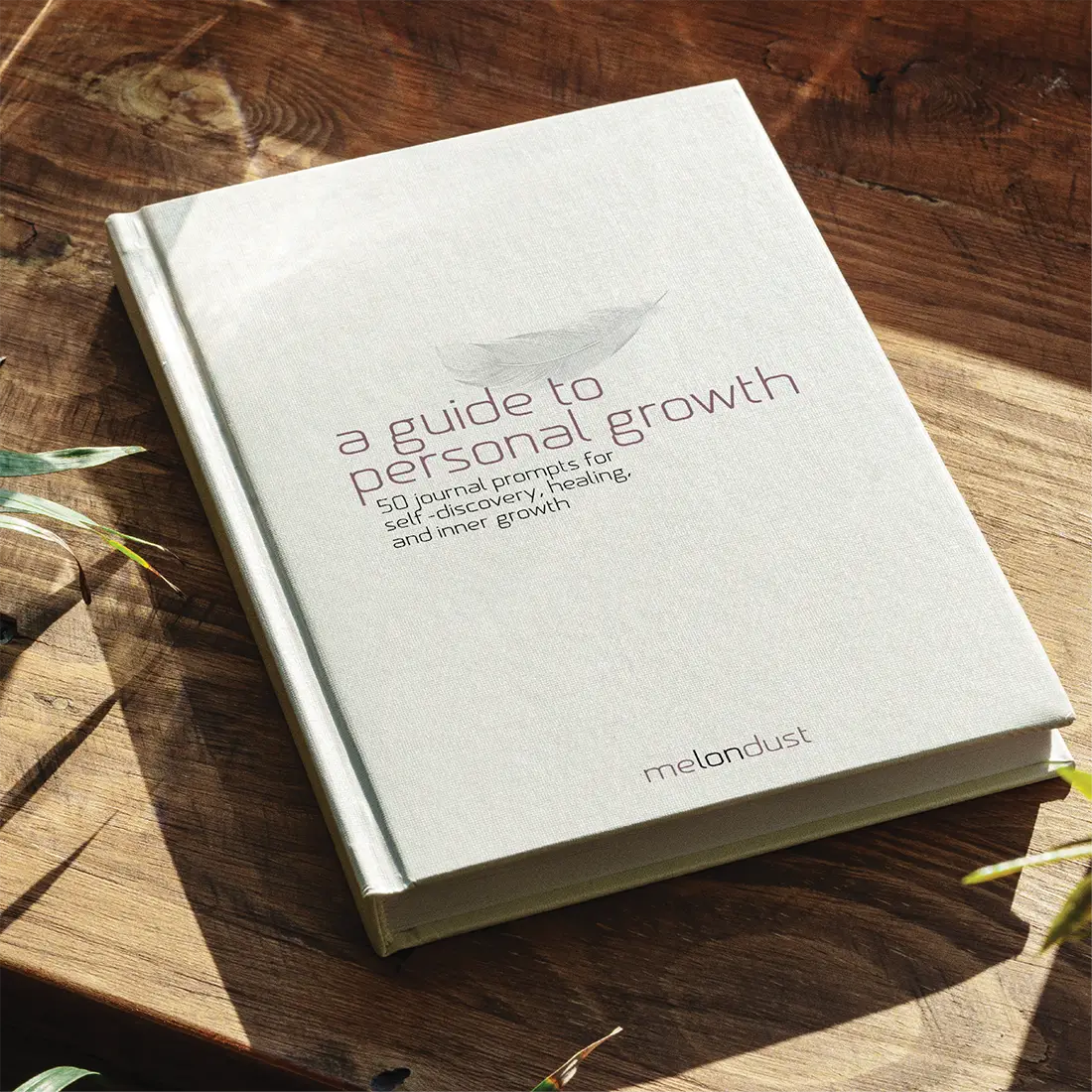
When you’re ready to go deeper
A Guide to Personal Growth
There comes a point when you are no longer asking only:
What am I feeling?
You begin asking:
Why?
What sits underneath this?
What do I truly want?
What am I afraid of?
Where am I holding myself back?
How have I changed?
And who am I becoming?
A Guide to Personal Growth is for someone who already has some experience with reflection or journaling and wants to explore their inner world more deeply. The guide contains 50 prompts designed around clarity, desires, triggers, fears and your personal-growth journey.
This isn’t where I’d ask a complete beginner to start. But when you’re comfortable sitting with a question and ready to explore beyond the surface, A Guide to Personal Growth gives you somewhere to go next.
Not every question will be relevant every day. Some may take you somewhere unexpected. Others might make you realise you already knew the answer. That’s part of the process.
You don’t have to turn yourself into a project
Reflection can be powerful, but it can also become another way of searching for what’s wrong. Another pattern to fix or wound to uncover. Another habit to change, or version of yourself you think you’re supposed to become. That isn’t what melondust is about. There’ll be times when reflection shows you something you want to change. Or show you something you need to accept or need to rest from or even need to stop apologising for. It may be something you’ve already grown through, or you simply aren’t ready to answer yet. You’re allowed to close the journal and sit with the question. You’re allowed not to know. Reflection isn’t about endlessly dissecting yourself, it’s about knowing yourself a little more honestly, and giving your own voice room.
Reflection creates awareness. What happens next is growth
Sometimes simply understanding something changes your relationship with it. You recognise the pattern, see the fear, or name the desire. Acknowledge what you’ve been tolerating. Hear your own answer. And then comes another question: What will I do with what I now know?
That’s where Reflect begins to become Grow. Growth doesn’t mean making a dramatic life change every time you discover something about yourself. It means allowing awareness to influence the choices you make. Gently. Honestly. One choice at a time.
Or perhaps you don’t need another question right now
Sometimes you’ve reflected enough and understand what’s been happening. You’ve journaled about it, thought and talked about it, and what you really need is somewhere to stop thinking and simply receive. That’s where Heal comes in.